Disclaimer: This article is for general informational purposes only and does not constitute financial advice. All scenarios are illustrative. You should consult a licensed finance professional or mortgage broker before making borrowing decisions.
The Serviceability Formula That Controls Your Loan Approval
Ask any broker what kills more home loan applications than a low deposit in 2026, and they will answer serviceability. It is not a credit score verdict or property valuation failure. It is the lender’s internal arithmetic that says your surplus income after a stressed rate interest charge is too thin.
APRA’s prudential standard APS 220 underpins the framework. The regulator requires authorised deposit-taking institutions (ADIs) to apply an interest rate buffer of at least 3 percentage points above the loan’s actual rate when assessing a new borrower. In practice, a variable owner-occupier loan priced at 5.89% p.a. is tested at 8.89%. Fixed-rate borrowers exiting a 2-year term can be tested at the higher of the residual fixed rate or the revert-to variable rate plus the buffer.
What the 2026 Numbers Look Like
Let’s anchor the discussion in current data:
- RBA cash rate target as at February 2026: 4.10% (RBA, Statement on Monetary Policy, February 2026)
- Average outstanding owner-occupier variable rate: 6.20% (RBA Table F5, January 2026)
- Serviceability assessment rate for a new loan priced at 6.09%: 9.09%
- Household Expenditure Measure (HEM) for a couple with two children: approximately $3,950 per month depending on the postcode tier (Melbourne Institute, HEM update 2025 applied to 2026)
That 9.09% assessment rate turns a $700,000 loan into a monthly interest-only stress payment of $5,301. Principal-and-interest testing lifts the monthly obligation higher. Lenders then deduct this from verified net income, subtract HEM or declared living expenses (whichever is higher), subtract other debt repayments, and look for a positive net surplus — usually at least $100–$200 per month.
When the cash rate was 0.10% in 2021, the same loan was tested at around 5.00%. Borrowing capacity has been structurally compressed.
A Quick Self-Assessment Table
Before you submit a loan application, run your household numbers through this simplified version of how a credit assessor sees you.
| Income / Expense Item | Monthly Amount (AUD) | Notes |
|---|---|---|
| Gross salary (PAYG) | $16,667 | $200,000 p.a. base |
| Rental income received | $2,500 | Only 80% counted by most lenders |
| Overtime / bonus | $0 | Most banks require 2-year history or shade to 80% |
| Total assessed income | $18,667 | After income shading |
| Proposed loan repayment (P&I) | $5,780 | Based on $700,000, 9.09%, 25-year term |
| Existing personal loan | $420 | Car loan repayment |
| HEM living expenses | $3,950 | Default floor used by lender |
| Credit card limit assessment | $450 | 3.0% of $15,000 limit per month |
| Other commitments | $0 | Child support payments, private school fees etc. |
| Total assessed outflows | $10,600 | |
| Monthly net surplus | $8,067 | Higher surplus = stronger application |
This household looks healthy, but the point is that change any lever — add a car loan, keep a high-limit credit card, reduce declared rental income — and the surplus narrows fast.
The APRA Buffer: Why 3% Matters More Than Your Actual Rate
APRA’s serviceability buffer has been locked at 3.0% since October 2021 after the regulator briefly moved it from 2.5% to 3.0% and decided not to unwind it. Every Australian bank and mutual bank must comply. Non-ADI lenders are not strictly bound but often mirror the buffer to satisfy warehouse funding partners.
Historical Buffer Context
| Period | Buffer Requirement | Cash Rate Context | Impact on Borrowing Power |
|---|---|---|---|
| 2014–2019 | Minimum 2.0% or floor rate of 7.0% | 1.50–2.50% | Generous |
| July 2019 – October 2021 | 2.5% (APRA updated APS 220) | 0.10–0.25% | Record-high borrowing capacity |
| October 2021 – present | 3.0% | 0.10% rising to 4.10% | Structural capacity cut of ~18–25% |
A buffer increase of 50 basis points subtracts roughly 5–6% from maximum borrowing capacity, all else being equal. The cumulative impact of 400 basis points of cash rate rises plus a steady 3% buffer has stripped approximately 30% of purchasing power compared with late 2021, according to CoreLogic’s December 2025 Housing Affordability Report.
Floor Rate vs Buffer: What Actually Gets Tested
Lenders apply the higher of:
- Product rate + 3.0% buffer, OR
- A minimum floor rate (commonly 5.25–5.50% for some non-banks, but major banks have embedded minimum assessment rates of about 7.50–8.00%)
At today’s rates, the product rate plus buffer always exceeds the floor rate, so the 3% addition is the binding constraint.
Income: What Lenders Count and What They Ignore
Serviceability starts with income, but it is never just your headline salary.
PAYG Base Income
100% of base salary is accepted when supplied with two most recent payslips and a notice of assessment showing no large tax debt. Fixed-term contractors need a remaining term of at least 6 months.
Variable Income: Shaded or Excluded
| Income Type | Typical Treatment (Major Banks) | Minimum History Required |
|---|---|---|
| Overtime | 80% of average over 2 years | 24 months |
| Commission | 80% of average | 24 months |
| Annual bonus | 80% accepted if paid for 2 consecutive years | 2 cycles |
| Car allowance | 100% if permanent, but offset by corresponding vehicle expenses | Confirmation from employer |
| Casual / shift loading | 80% of average if >12 months with same employer | 12 months |
Borrowers who changed jobs mid-year should expect underwriters to request a letter of employment and at least one payslip. Probation periods can delay unconditional approval.
Self-Employed Borrowers: 2-Year Rule Intact
Self-employed income assessment in 2026 has not softened materially. Banks require:
- Two full years of personal and business tax returns
- ATO notice of assessment for both years
- Business profit & loss and balance sheet
- Add-backs for depreciation, additional super contributions, and one-off expenses are allowed, but sustained losses will tank serviceability even if the business is cash-flow positive as currently managed
Low-doc and alt-doc products exist with non-banks but typically come with a loading of 0.50–1.50% on the interest rate and LVR caps of 70–80%. The higher rate itself reduces net surplus, so the serviceability benefit is often smaller than borrowers assume.
Rental Income: The 80% Shading Rule
A second property’s rental income is assessed at 80% of the signed lease or a valuation-based market rent estimate, whichever is lower. And the associated debt is deducted at the full stressed repayment. Negative gearing does not help serviceability because the tax benefit is not included in the calculation; lenders only care about after-tax cash flow.
Living Expenses: HEM vs Declared
Lenders use the Household Expenditure Measure (HEM) as a floor. HEM is a benchmark based on ABS household expenditure data and gets adjusted annually. The Melbourne Institute publishes updated tables used by most banks.
2026 HEM Figures for Selected Households
| Household Type | Monthly HEM (Approx.) | Annual |
|---|---|---|
| Single adult | $1,600 | $19,200 |
| Couple | $2,400 | $28,800 |
| Couple + 2 children | $3,950 | $47,400 |
Where declared living expenses from bank statements exceed HEM, the higher figure is used. This is the reason brokers drill borrowers on discretionary spending. An extra $1,000 of monthly Uber Eats disclosed via transaction analysis can shrink borrowing capacity by $70,000–$90,000.
Transaction Analysis Is Near-Universal
In 2026, almost all major lenders use open-banking-powered expense verification. They categorise transactions and compare declared expenses to observed ones. If discrepancy exceeds 10–15%, the loan file is queried. Accuracy wins.
Debt Servicing and the Credit Card Trap
Every dollar of committed debt repayment reduces net surplus, but credit cards punch far above their weight.
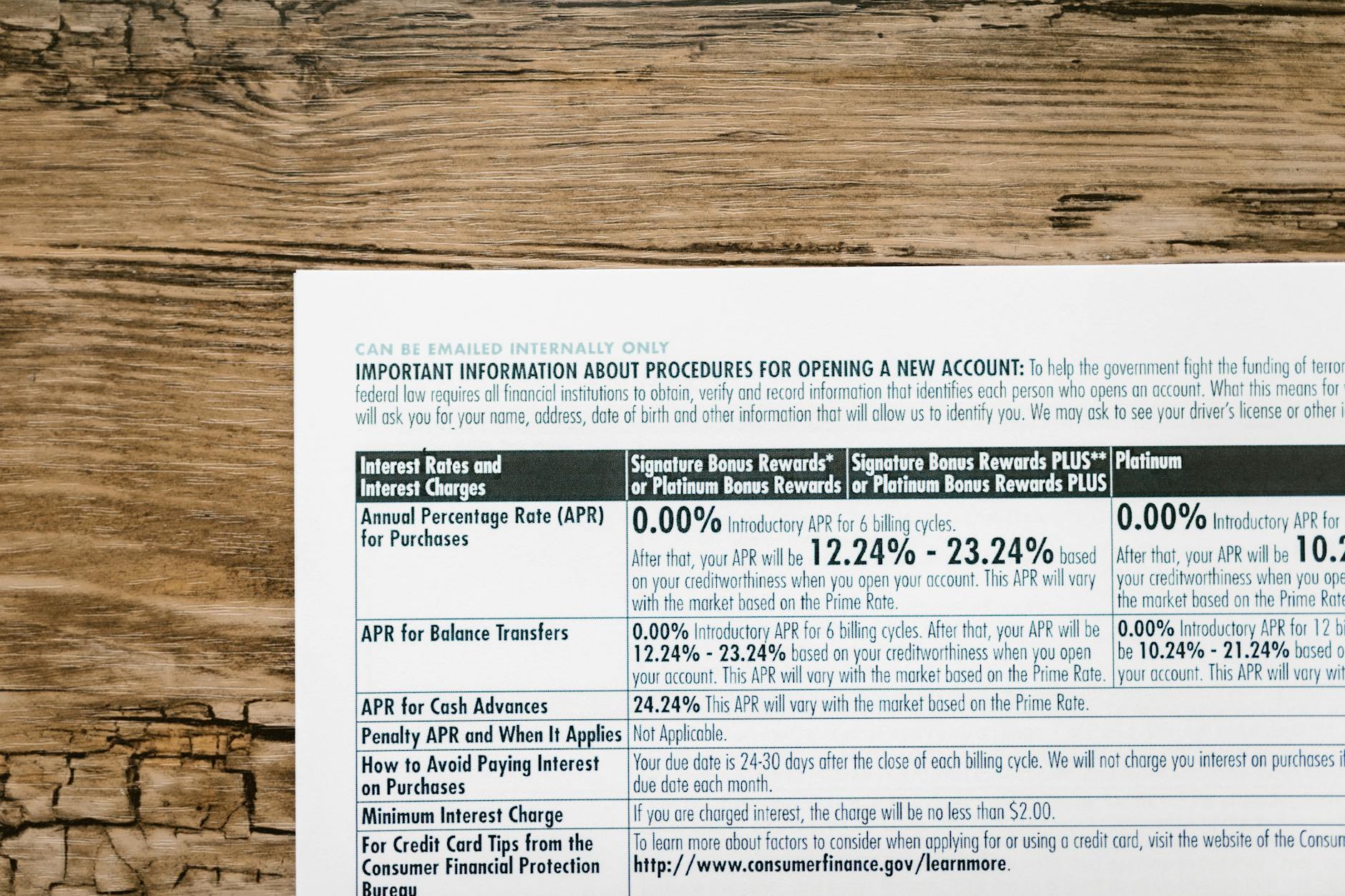
Lenders assess credit cards at 3.0–3.8% of the total card limit per month, regardless of whether you owe a cent. A $20,000 limit translates to a $600–$760 monthly commitment in the serviceability engine. That is equivalent to servicing an extra $90,000–$110,000 of home loan principal.
Car loans, personal loans, and buy-now-pay-later (BNPL) facilities are treated similarly. BNPL accounts with a $2,000 limit may still incur a monthly expense assumption of $60–$100 depending on the provider. Many brokers now recommend closing any unused BNPL accounts before application.
HECS-HELP debt is treated as a compulsory expense based on the repayment income thresholds. For 2025–26, compulsory repayments start at 1% of taxable income above $54,435 and step up to 10% above $151,200. Lenders use this figure as a non-discretionary outflow.
How to Calculate Your Own Serviceability Surplus
You can build a reasonable proxy with a spreadsheet. The formula is:
Monthly Net Surplus = Assessed Income - (Stressed Loan Repayment + Existing Debt Repayments + Living Expenses + Buffer Margin)
Step-by-step:
- Sum all verified income after shading.
- Calculate proposed loan repayment using the stressed rate (actual rate + 3%) over a 25-year principal-and-interest term.
- Add minimum monthly payments on all existing loans, credit cards (3% of limit), and HECS.
- Use the greater of your 3-month average declared living expenses or HEM.
- Subtract total outflows from total income. A surplus of at least $200/month is preferred.
Worked Example: Single Buyer, $120,000 Income
- Gross monthly income: $10,000 (after salary sacrifice deduction)
- Stressed repayment on $550,000 loan at 9.09%, 25 years: $4,635/month
- Car loan: $480/month
- Credit card ($8,000 limit): $240/month
- HEM single adult: $1,600/month
- Total outflows: $6,955/month
- Net surplus: $3,045/month (strong)
If this buyer carried a $30,000 HECS debt, the annual repayment would be $6,000 (5% of $120,000 above threshold), reducing monthly surplus by $500 and pulling borrowing capacity down by roughly $75,000.
Seven Actions That Actually Move the Needle (2026 Edition)
Based on current lender policies and APRA’s enduring 3% buffer, these levers improve assessed surplus without requiring a pay rise:
- Reduce or cancel credit card limits. Cutting a $20,000 limit to $5,000 releases $450–$570 of monthly surplus, increasing borrowing capacity by $70,000–$90,000.
- Close all unused BNPL accounts. Even a $1,000 Zip Pay limit can cost you $30–$50/month in assessment.
- Refinance or pay off car loans. A $600/month car loan could be swallowing $90,000–$120,000 in home loan capacity.
- Consolidate personal loans into the home loan (with a longer term). This converts short-term high payments into long-term lower payments, improving monthly cash flow assessment.
- Get salary continuance and bonus letters confirmed in writing. Ensuring 80% of variable income is accepted requires documentation; ad hoc bonuses without a letter often get zero weighting.
- Trim discretionary expenses for 3 months pre-application. Because transaction analysis looks at the 90-day average, a short-term spending cleanse raises the chance that declared expenses fall below or equal HEM.
- Use a broker who understands non-bank credit policy. Where major banks reject a file due to DTI caps or overly blunt expense assessment, a non-bank may deliver approval at a slightly higher rate.
Why Serviceability Stalls Applications More Than Valuations
CoreLogic’s 2025–26 data shows national dwelling values have slipped about 3% year-on-year, but valuation shortfalls are rare below 90% LVR. Serviceability, by contrast, touches every single application. A RateCity survey (December 2025) of 1,200 prospective buyers found that 54% who were pre-approved in principle had their maximum loan amount revised downward at full assessment — primarily due to expense verification and debt disclosures.
That mismatch between pre-approval and formal approval is expensive. It forces renegotiation of contract terms, sometimes loss of deposit. Understanding serviceability before you bid at auction is not optional; it is risk management.
Q: Does offset account balance improve serviceability?
Offset account funds are not considered as income or a direct reduction of debt for serviceability purposes — the loan is assessed at the full facility limit. However, offset cash improves your asset position and reduces LVR if you choose to lower the loan amount at application. Some non-banks are introducing offset-aware serviceability modules in 2026, but major banks have not followed yet.
Q: Can I use rental income from a granny flat or boarding arrangement?
Yes, but only if council-approved and supported by a formal lease. Cash-in-hand board income without a lease and bank-credited payments will not be accepted by most ADIs. Non-banks may consider boarding income at 50–65% shading without a formal tenancy agreement, but terms vary.
Q: How does parental leave affect serviceability in 2026?
Borrowers on paid parental leave can use their standard base income if they provide a letter from the employer confirming the return-to-work date within 12 months and salary upon return. Unpaid leave beyond the employer-confirmed period will typically mean the application is assessed on the reduced or nil income for that period, drastically reducing borrowing capacity.
Q: Does a rate lock help with serviceability?
No. A rate lock fixes the actual interest rate for a period but does not change the stressed assessment rate used for serviceability. You are still tested at the higher of the locked rate plus 3% or the lender’s floor rate.
Reference Sources
-
APRA – APS 220 Prudential Standard Credit Quality
https://www.apra.gov.au/aps-220-credit-quality
The authoritative source on the 3% serviceability buffer and capital requirements for ADIs. Updated as of 2025, applied into 2026. -
RBA – Statement on Monetary Policy February 2026
https://www.rba.gov.au/publications/smp/2026/feb/
Provides the cash rate setting, household debt metrics, and forward-looking financial stability analysis relevant to borrowing capacity. -
CoreLogic – Housing Affordability Report December 2025
https://www.corelogic.com.au/research/monthly-housing-chart-pack
Contains dwelling value indices and affordability ratios, including the proportion of income required to service a new mortgage. -
Melbourne Institute – Household Expenditure Measure (HEM)
https://melbourneinstitute.unimelb.edu.au/
Maintains the HEM tables used by Australian lenders to set living expense floors during serviceability assessment.