Disclaimer: This article is for informational purposes only and does not constitute financial advice. Always consult a licensed financial adviser or mortgage broker before making property or investment decisions.
TL;DR
Adelaide remains one of Australia’s most affordable capital cities in 2026, but the gap is narrowing fast. The median house price sits at $753,000, up 7.2% year-on-year, while the median household income is $112,300. With a 20% deposit and a 5.6% average mortgage rate, monthly repayments on a typical home loan reach $3,820—about 41% of gross income. Rental affordability has also tightened, with the median weekly rent hitting $560. First home buyers can still find entry points, especially in northern suburbs like Elizabeth or Salisbury, where prices average $440,000. Government support such as the First Home Owner Grant and stamp duty concessions remain critical. This article breaks down real numbers, regional disparities, and what it truly costs to live in Adelaide today.
Adelaide Affordability at a Glance: 2026 Key Metrics
| Metric | Value (2026) | Annual Change |
|---|---|---|
| Median House Price (Adelaide metro) | $753,000 | +7.2% y/y |
| Median Unit Price | $476,000 | +5.8% y/y |
| Median Household Income | $112,300 | +3.1% y/y |
| Price-to-Income Ratio | 6.7 | 6.3 (2025) |
| Average Mortgage Rate (owner-occupier, P&I) | 5.6% | -0.4pp from peak |
| Monthly Repayment (median house, 20% deposit) | $3,820 | +$290/month |
| Repayment as % of Median Gross Income | 40.8% | 37.5% (2025) |
| Median Weekly Rent (houses) | $560 | +9.3% y/y |
| Rental Affordability Index (SA) | 107 | 112 (2025) |
| First Home Buyer Market Share (Adelaide) | 34% of purchases | — |
| Minimum Income to Buy Median House (no stress) | ~$138,000 | — |
Sources: CoreLogic Adelaide Hedonic Home Value Index (Mar 2026), ABS Average Weekly Earnings, RBA Lenders’ Rates, SQM Research Weekly Rents Index, SA Government Revenue Office.
How Adelaide’s Affordability Has Evolved since 2020
Adelaide entered the pandemic with a median house price of just $478,000 (March 2020). Over the next six years, the city witnessed a staggering 57% cumulative price growth—outpacing every other capital except Perth in percentage terms. This run-up has been driven by:
- Remote work flexibility: Interstate migration surged, with 18,400 net arrivals from Sydney and Melbourne in 2023–24 alone (ABS).
- Relative value: Even at $753,000, Adelaide’s median is still 42% below Sydney’s $1.3M.
- Supply constraints: New dwelling approvals in Greater Adelaide fell 11% in 2025–26, keeping stock tight.
Yet income growth has lagged. The median household income rose only 18% over the same period, pushing the price-to-income multiple from 4.8 to 6.7. In 2020, a median-income household spent 28% of gross income on repayments; that figure now tops 40%. Mortgage stress is no longer a fringe issue.
Rental affordability has followed suit. Vacancy rates in Adelaide hovered at 1.1% in early 2026—well below the 3% level considered balanced. The median rent for a house has climbed from $395 in 2020 to $560, absorbing 30% of a typical household’s pre-tax earnings. For singles or pensioners, the story is far grimmer.
Adelaide vs Other Capitals: Where It Stands in 2026
Adelaide still wears the “Most Affordable Mainland Capital” badge, but the lead is fragile. Here’s how it compares:
| City | Median House Price | Price-to-Income Ratio | Monthly Repayment (20% dep, 5.6%) |
|---|---|---|---|
| Sydney | $1,315,000 | 12.1 | $6,670 |
| Melbourne | $895,000 | 8.4 | $4,540 |
| Brisbane | $812,000 | 7.8 | $4,120 |
| Adelaide | $753,000 | 6.7 | $3,820 |
| Perth | $708,000 | 6.4 | $3,590 |
| Hobart | $690,000 | 7.5 | $3,500 |
| Darwin | $560,000 | 5.9 | $2,840 |
Note: Monthly repayments are principal and interest, 30-year term.
While Darwin offers a lower absolute price, Adelaide’s larger employment base, education institutions, and lifestyle appeal continue to attract a broader demographic. The key takeaway: unless you’re willing to move to Darwin or regional SA, Adelaide remains the best trade-off between price and opportunity. Still, Brisbane is now only 7.8% more expensive—the gap has halved since 2021.
The Real Cost of a Mortgage in Adelaide Today
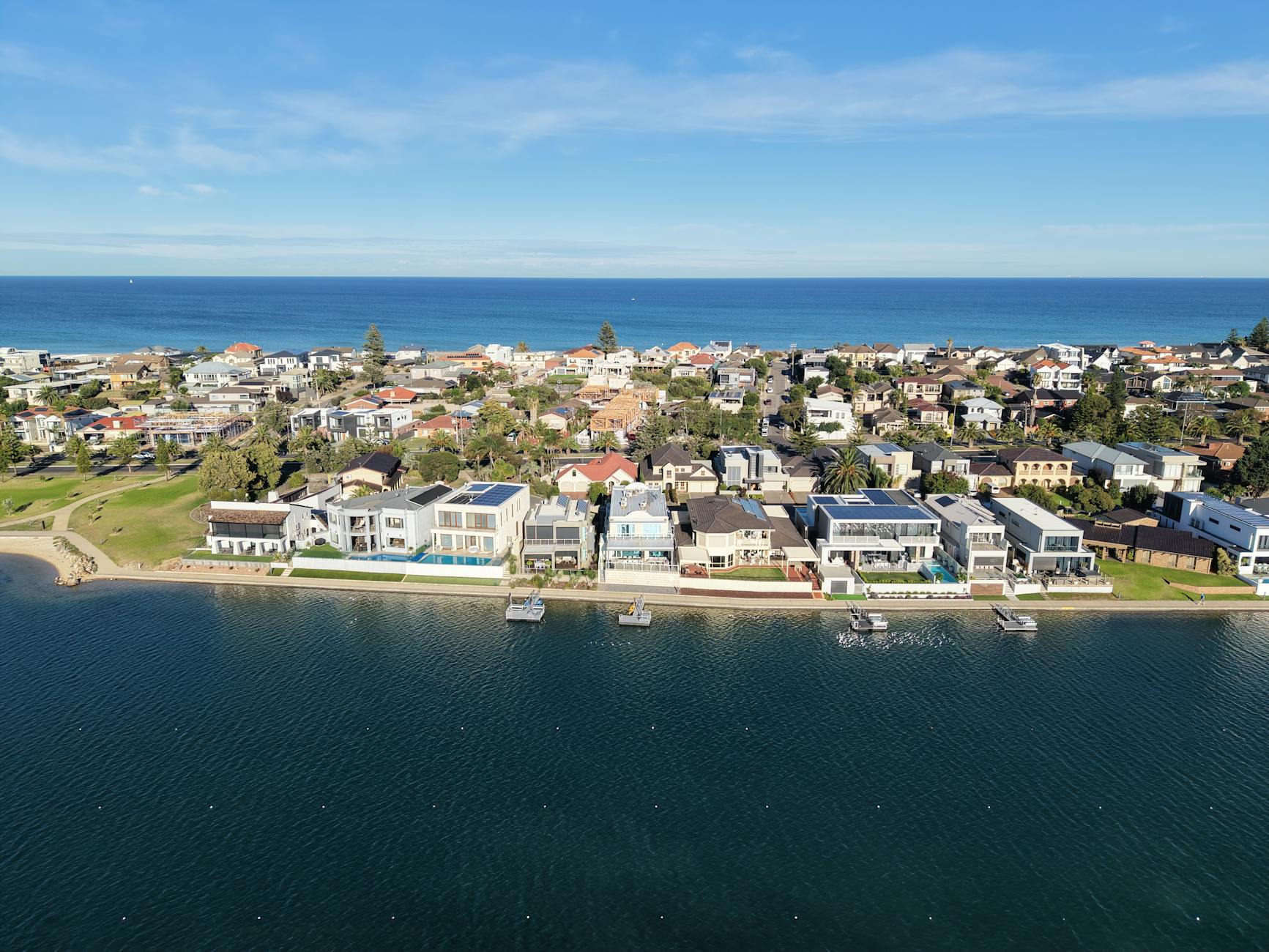
Let’s run the numbers for a typical Adelaide home purchase in 2026.
Scenario: Median house $753,000, 20% deposit ($150,600), loan amount $602,400.
- Interest rate: 5.6% (average advertised variable rate for owner-occupiers)
- Term: 30 years
- Monthly repayment: $3,822
- Annual repayment: $45,864
- Required gross income (30% rule): $152,880
- Required gross income (35% rule): $131,040
If you stretch to a 10% deposit and pay Lenders Mortgage Insurance (LMI), the numbers worsen:
- Loan amount $677,700, LMI premium ~$15,000 capitalized.
- Monthly repayment rises to $4,300.
- Income needed for 30% rule jumps to $172,000.
These figures explain why first home buyers are increasingly relying on parental guarantees or government schemes. With the First Home Guarantee (formerly FHLDS) allowing a 5% deposit and no LMI, the monthly repayment on a median home drops to $4,070, but that’s still a heavy lift for a single earner on the median full-time salary of $89,500.
Investor mortgages are even pricier. In April 2026 the average investor variable rate sits at 6.1%. On the same home, an interest-only period pushes monthly cashflow to $3,050 for the first five years, but principal payments eventually catch up. Investors should factor in 2.1% vacancy rate (REISA) and land tax thresholds.
Where First Home Buyers Can Still Break In
Despite the gloomy headlines, Adelaide offers genuine entry points. Concentrate on the northern and outer southern belts, and consider units—often overlooked but still accessible.
Top 5 Affordable Suburbs for Houses (2026 Median)
- Elizabeth / Davoren Park – $412,000
- Salisbury / Salisbury Downs – $460,000
- Smithfield – $475,000
- Hackham West – $498,000
- Christie Downs – $515,000
In these catchments, a 5% deposit via the First Home Guarantee can get you in with as little as $23,000 (including stamp duty concessions for properties up to $650,000). The mortgage repayment on a $440,000 home with 5% down works out to around $2,620/month—manageable on a $95,000 household income.
Units: The Forgotten Bridge
Adelaide’s median unit price of $476,000 masks even cheaper micro-markets. In suburbs like Richmond, Torrensville, and Thebarton, well-located two-bedroom units trade between $380,000 and $420,000. That’s a deposit as low as $19,000 (5%) and monthly repayments around $2,280. Strata fees of $400–$600/quarter need to be factored in, but the total holding cost still beats renting.
Government Support in 2026
- First Home Owner Grant (FHOG): $15,000 for new homes up to $575,000.
- Stamp Duty Concession: Full exemption up to $450,000, sliding scale to $650,000.
- First Home Guarantee: 5% deposit, no LMI (35,000 places nationally in FY2025–26).
- Regional First Home Buyer Support Scheme: Additional 10,000 places for regional SA with a minimum 5% deposit.
- Help to Buy shared equity: Commonwealth program where government takes up to 40% equity in a home (SA pilot extended, income cap $90,000 singles).
Rent vs Buy: The Affordability Trade-Off
Adelaide tenants faced a brutal 2025–26, with rents rising 9.3% annually—the highest growth among capitals. The median house rent of $560/week equates to $2,430/month, which looks appealing next to a $3,820 mortgage. But that comparison misses depreciation, rates, insurance, and maintenance costs that renters don’t bear. When you factor in:
- Council rates: $1,800/year
- Water supply and sewerage: $1,000/year
- Building insurance: $1,200/year
- Maintenance allowance (1% of value): $7,530/year
Total annual ownership costs beyond the mortgage reach ~$11,530, or $960/month. So the true monthly cost of owning that median home in Adelaide is closer to $4,780. That’s still $2,350 more than renting. The financial case for buying hinges on capital growth. If Adelaide’s median rises another 6% in 2027, that’s a $45,180 gain, outweighing the cashflow penalty.
Renting also comes with insecurity: only 22% of leases in Adelaide offer fixed terms longer than 12 months (RTA SA data). For families or those nearing retirement, the stability of homeownership often overrides the spreadsheet.
Interest Rate Outlook and what it Means for Your Loan
The RBA’s 2026 cash rate settled at 3.85% after two 0.25% cuts in late 2025. Futures markets price in a further 0.25–0.50% of easing by December 2026. If lenders pass on a full 0.50%, the average owner-occupier variable rate could fall to 5.1%. On a $602,400 loan, that would save $195/month. Fixed rates are already dipping: 3-year fixed offers sit around 4.99% (major bank average). Fixing could lock in certainty but sacrifices flexibility.
Q: What household income do I need to afford a median-priced house in Adelaide in 2026?
To comfortably service a mortgage on Adelaide’s $753,000 median house (20% deposit, 5.6% rate), you’ll need a gross household income of around $130,000–$140,000 to keep repayments under 35% of income. With a single income, this stretches to about $175,000. Lenders typically apply a 3% serviceability buffer, meaning they’ll assess your ability to repay at 8.6%. At that rate, the required income leaps to $160,000 joint or $200,000 single. Many borrowers are turning to non-bank lenders with more flexible buffers or using rental income from a granny flat to boost borrowing power.
Q: Which Adelaide suburbs are still affordable for first home buyers?
In 2026 the most affordable entry points are in the north (Elizabeth, Salisbury, Davoren Park – median $400,000–$460,000) and some pockets of the outer south (Hackham, Morphett Vale). Buyers can also consider units in inner-west suburbs like Richmond or Torrensville for under $500,000. For those willing to commute 45–60 minutes, Murray Bridge ($370,000) and Gawler ($435,000) provide tree-change options with train access to the CBD. Always check the SA Government’s stamp duty concession thresholds and first home buyer grants, which can save up to $25,000 in upfront costs.
Q: Is it better to rent or buy in Adelaide right now?
At current rates, buying a median-priced home costs about $3,820/month in mortgage repayments vs median rent of $2,430/month ($560/week). However, with property values rising 6–8% annually, the equity gain often outweighs the extra cost. Buying makes sense if you’re staying put for at least 5–7 years. Renters can still win by investing the difference into a diversified portfolio, but few do. Use a rent-vs-buy calculator factoring in your tax bracket, expected rent rises, and maintenance. For typical Adelaide first home buyers, the emotional and financial security of homeownership still tips the scales.
Reference Sources
- CoreLogic Adelaide Home Value Index (March 2026) – Most recent hedonic index data for Adelaide’s median prices and rental yields. https://www.corelogic.com.au/our-data/indices (Authoritative property data provider)
- RBA Statistical Tables – Indicator Lending Rates (April 2026) – Official borrower interest rates across all lender types. https://www.rba.gov.au/statistics/tables/ (Central bank, highest reliability)
- SQM Research Weekly Rents Index – Rental vacancy rates and asking rents for Adelaide metro. https://sqmresearch.com.au/ (Independent research house)
- SA Government Revenue Office – First Home Buyer Assistance – Up-to-date FHOG amounts, stamp duty concessions, and eligibility. https://www.revenuesa.sa.gov.au/ (Official government source)
- ABS Average Weekly Earnings (November 2025) – Used to derive median household income estimates applying regional adjustment factors. https://www.abs.gov.au/statistics/labour/earnings-and-working-conditions (National statistical agency)