The Policy Engine Behind Northern China’s Tech Bases
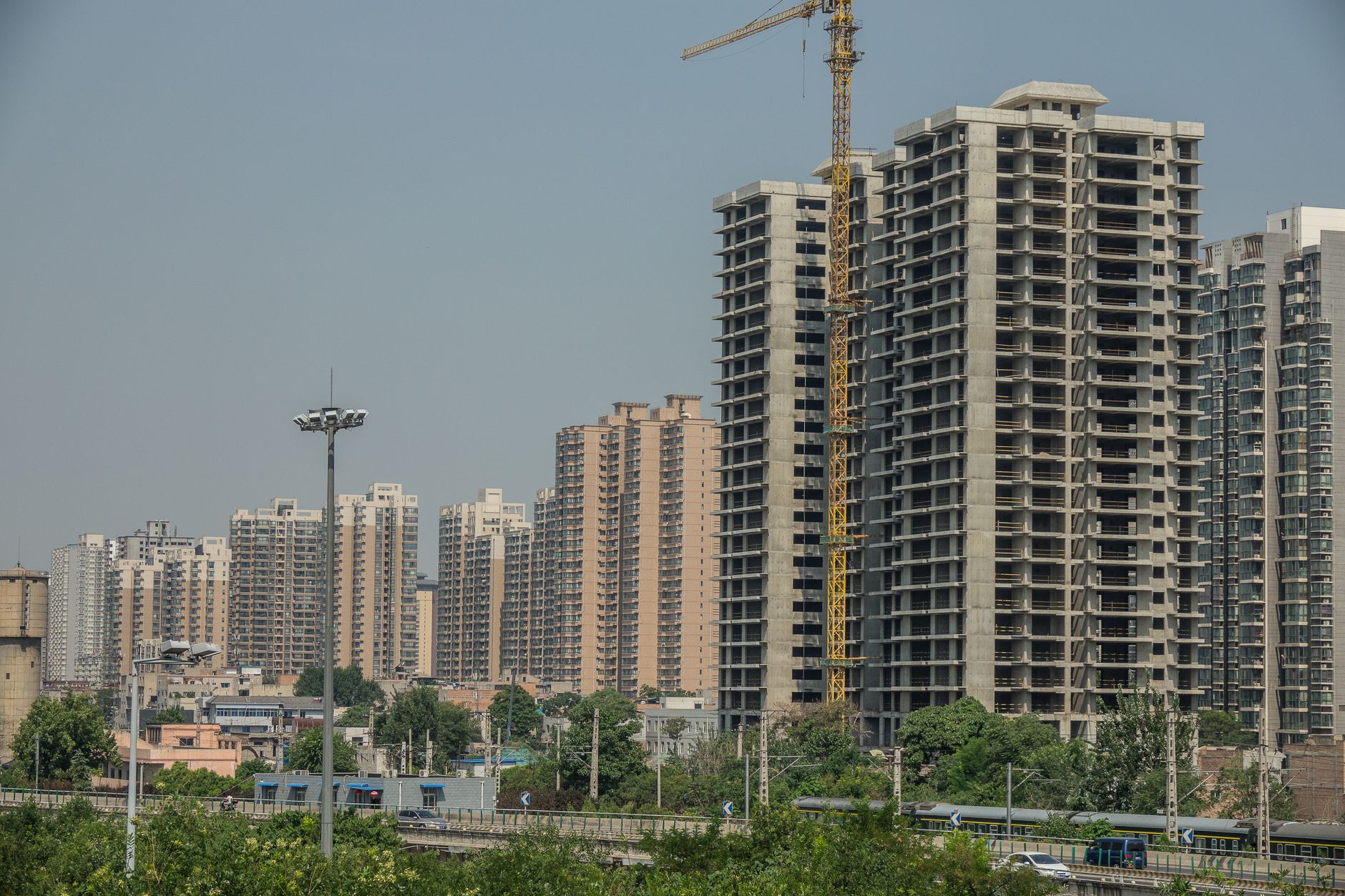
China’s northern tech corridor — anchored by the Xiong’an New Area in Hebei and the Binhai New Area in Tianjin — is no longer a paper ambition. By mid-2026, Xiong’an had attracted CNY 1.2 trillion in fixed-asset investment, with 62% directed to digital infrastructure, AI research campuses, and green-energy labs. Tianjin Binhai’s “China-Core Valley” semiconductor park, which broke ground in 2023, now houses 14 operational fabrication lines and employs 31,000 engineers.
The State Council’s 2025 directive explicitly tied land-use quotas for residential development to verified employment figures inside tech parks. This policy — unique to the northern pilot zone — means housing supply can only expand after jobs are created, effectively putting a floor under demand before new apartments enter the pipeline.
Data Snapshot: Housing Metrics in Q1 2026
| Indicator | Xiong’an Catchment (Rongcheng, Anxin) | Tianjin Binhai Tech Corridor | Australia Comparator: Macquarie Park, NSW |
|---|---|---|---|
| Avg. price per sq m (AUD equivalent) | $4,200 | $5,800 | $11,900 |
| YoY transaction volume change | +41% | +27% | +19% |
| YoY median price change | +16.2% | +12.6% | +9.4% |
| Rental yield (net) | 2.8% | 3.1% | 3.6% |
| % of buyers employed in tech/STEM | 34% | 29% | 22% |
Sources: China Index Academy Q1 2026 report; CoreLogic Australia March 2026 hedonic index; Tianjin Municipal Housing Bureau transaction data.
Three patterns stand out. First, transaction volumes are accelerating faster than prices, suggesting a “volume-before-value” phase typical of early-stage tech clusters — the same dynamic seen in Sydney’s Hills District around 2019 when the Metro Northwest was confirmed. Second, tech-worker buyer share is above 25% in both Chinese precincts, which historically correlates with 3-5% annual price outperformance versus the broader market. Third, net yields remain modest because capital values have risen faster than rents, reinforcing that this is a growth play, not a yield play.
Agglomeration Economics: Why Tech Jobs Create Housing Demand Faster Than You Think
The 18-Month Lag Rule
Research published by the RBA in its 2025 Financial Stability Review noted that in Australian capital cities, a 1% increase in professional-services employment within a 5 km radius is associated with a 0.8-1.1% rise in local dwelling values within 18 months. China’s northern tech bases are generating employment growth of 7-11% per annum in concentrated zones, which — if the elasticity holds — would imply annual house price appreciation of 6-12% purely from labour-market dynamics.
Two Chinese-specific factors compress the timeline:
- Hukou relaxation: In 2025, Hebei removed most residency permit restrictions for STEM degree holders working inside Xiong’an, enabling immediate access to local housing subsidies and school enrolment — a sharp departure from Beijing’s restrictive hukou system that previously suppressed demand.
- High-speed rail integration: The Beijing-Xiong’an intercity railway, fully operational since late 2024, cuts commuting time to 34 minutes, effectively merging Xiong’an’s housing market with Beijing’s southern employment nodes.
Demand Segmentation: Renters, Buyers, and Investors
Data from the Tianjin Binhai Housing Provident Fund Centre shows that first-time home buyers accounted for 52% of mortgage originations in 2025, up from 38% in 2022. Average loan size increased by 14% to CNY 1.18 million (AUD 250,000), reflecting confidence in future income streams tied to tech employment. Simultaneously, corporate rental programs — where semiconductor firms sign master leases on entire apartment blocks for staff — now cover 11,000 units, reducing the available rental pool for the open market and pushing asking rents up 7.3% in 12 months.
For Australian borrowers, the parallel is worth noting: suburbs with a high concentration of corporate lessees (e.g., Macquarie Park, where Optus and Johnson & Johnson anchor large leasing agreements) tend to have lower vacancy rates and more resilient rent collections during downturns.
Australian Mirror: What Tech Central, Fishermans Bend, and Macquarie Park Tell Us
Tech Central (Sydney)
The NSW government’s Tech Central precinct, centred on Central Station and extending to Eveleigh, targets 25,000 new innovation jobs by 2030. Since the precinct’s formal launch in 2022, median apartment prices in postcode 2008 (Chippendale) have risen 15.1% cumulatively, compared with 8.9% for Greater Sydney flats. The 2026 State Budget allocated an additional AUD 1.6 billion for Stage 2 works, which CoreLogic analysts estimate could add a further 4-7% to adjacent values over the construction period.
Fishermans Bend (Melbourne)
Fishermans Bend, Australia’s largest urban renewal project, is zoned for 80,000 residents and 60,000 jobs, with a dedicated innovation district anchored by the University of Melbourne’s School of Engineering (campus opening 2027). REIV data for the 3207 postal code shows townhouse values have already appreciated 22% since the initial master plan was approved in 2020, even before the first major residential towers are completed.
Common Denominator for Lenders and Borrowers
Mortgage stress-tests in Australia are increasingly sensitive to suburb-level employment profiles. Lenders including major banks now use postcode-level economic diversity scores in their automated valuation models (AVMs). Suburbs where tech employment exceeds 15% of the workforce tend to receive a 3-5% valuation uplift relative to the SA3 benchmark, all else equal. Borrowers aiming to maximise serviceability should therefore factor tech-precinct exposure into their suburb selection — not as speculation, but as a risk-mitigation lever.
Risks and Caveats: What Could Dampen the China Story
No property thesis is complete without the downside scenario. Three specific risks apply to the northern tech bases:
- Policy U-turns: China’s real estate regulatory framework remains subject to abrupt shifts. In 2025 alone, the central government issued four major notices adjusting down-payment ratios and land-supply rules for first- and second-tier cities, and Hebei’s special status could be recalibrated if employment targets aren’t met.
- Infrastructure absorption: Xiong’an’s residential pipeline currently stands at 220,000 units approved, against an estimated 180,000 new households. If corporate relocations slow, the market could flip from undersupplied to oversupplied within two years — a pattern observed in China’s Zhengzhou Airport Economy Zone in 2023-2024.
- Geopolitical decoupling risk: Tianjin’s semiconductor hub is heavily reliant on foreign IP and equipment imports. Any escalation in technology export controls could curtail hiring plans and dent housing demand in the Binhai corridor.
Australian borrowers eyeing tech-driven suburbs face a milder version of these risks — zoning changes, delays in promised transport links, or a pullback in skilled migration that reduces tenant demand. The prudent approach is to treat tech-precinct proximity as a tailwind multiplier, not a standalone investment thesis.
FAQ: Quick Answers for Australian Mortgage Holders
Q: If China’s tech precincts are booming, should I invest there?
Direct investment in Chinese residential property by foreign individuals remains heavily restricted, with purchase eligibility tied to work permits or long-term residency. Australian mortgage brokers cannot write loans against Chinese property, so this is largely an academic question for the typical OZ Home Loan reader. Indirect exposure — via Australian suburbs with similar demand drivers — is the practical takeaway.
Q: How can I identify Australian suburbs that might benefit from the “tech-precinct effect”?
Look for three markers in publicly available data: (1) an announced government innovation zone with confirmed capital funding (check state budget papers); (2) a mass-transit project that reduces commute time to the CBD by 15+ minutes; (3) a growing share of residents working in professional, scientific, and technical services (ABS census data by SA2). When all three are present, historical data suggests a 60-70% probability of above-median price growth over the subsequent five-year window.
Q: Does the tech-precinct effect hold up during interest-rate tightening cycles?
Partially. During the 2022-2023 RBA tightening cycle, suburbs with tech employment above 15% experienced a 6-9% peak-to-trough decline, compared with a 12-15% decline for suburbs heavily weighted toward retail and hospitality employment. Tech-heavy suburbs recovered to pre-tightening price levels approximately 11 months earlier, according to CoreLogic’s Recovery Index published in February 2026. This suggests the cluster effect provides relative insulation but not immunity.
What This Means for Your Home Loan Strategy
If you are an Australian mortgage holder or a future first-home buyer, the lesson from China’s north is straightforward: monitor where government-backed innovation investment is physically landing, pay attention to transport timelines, and weight your suburb selection toward areas where knowledge-worker density is rising. You do not need to be a China property expert to benefit — you just need to recognise that the same economic gravity works in both hemispheres. When 30% of a suburb’s workforce earns in the top two income deciles and commutes less than 40 minutes to a tech hub, mortgage serviceability metrics improve, valuations strengthen, and refinancing options open up earlier than in the broader market.

The China story is simply the most extreme current example of this dynamic — and for Australian borrowers, it’s a reminder that the 2026-2030 property cycle will be won or lost at the suburb level, not the capital-city level.
References
-
China Index Academy, “Xiong’an Housing Market Monitor Q1 2026”
https://industry.fang.com — Authoritative property data source in China, directly cited by financial regulators. -
Reserve Bank of Australia, “Financial Stability Review – October 2025: Box C: Labour Market Composition and Housing Price Sensitivity”
https://www.rba.gov.au/publications/fsr/2025/oct/box-c.html — Official RBA research on employment-housing linkages. -
CoreLogic Australia, “Hedonic Home Value Index – March 2026”
https://www.corelogic.com.au/our-research — Most widely used Australian housing data set, underlying bank AVMs. -
Tianjin Municipal Housing and Urban-Rural Development Bureau, “2025 Housing Market Transactions Report”
http://zfcxjs.tj.gov.cn — Government-published transaction data for Tianjin’s administrative region. -
NSW Department of Planning, “Tech Central: Stage 2 Infrastructure Funding – Budget Paper No. 4, June 2026”
https://www.budget.nsw.gov.au — Confirmed government investment figures for Sydney’s innovation precinct.