Disclaimer: This article is for general informational purposes only and does not constitute financial or legal advice. Please consult a licensed mortgage broker or financial advisor before making any property or loan decisions.
TL;DR: Brisbane’s property market has entered a recalibration phase after the 2032 Summer Games. Median house prices briefly dipped 3.5% in early 2024, but by mid‑2026 the CoreLogic Greater Brisbane index shows a 7.1% year‑on‑year rebound to $892,000. Rental yields have compressed to 3.9% while the RBA cash rate sits at 3.60%, moderating borrowing capacity. Loan approval data from APRA indicates investor activity is rising along legacy transport corridors, especially Cross River Rail catchments. For borrowers, post‑Olympic trends point to steadier, more income‑driven growth rather than speculative spikes, making 2026 a window for calculated purchase decisions.
The 2032 Legacy: How the Olympics Reshaped Brisbane’s Property Landscape
The Brisbane 2032 Olympic and Paralympic Games delivered a A$4.2 billion injection into transport and sporting infrastructure, leaving a permanent imprint on the city’s housing markets. Unlike previous host cities that experienced a sharp “hangover” in property values, Brisbane’s pricing trajectory has been tempered by three structural factors: infrastructure that directly reduces commute times, population growth averaging 1.6% per annum (Australian Bureau of Statistics, June 2026), and a relatively affordable median compared to Sydney (A$1.38 million) and Melbourne (A$1.05 million).
Key post-Olympic housing data points (June 2026):
| Metric | Value | Source |
|---|---|---|
| Greater Brisbane median house price | A$892,000 | CoreLogic Hedonic Index, July 2026 |
| Median unit price | A$585,000 | CoreLogic |
| Annual price growth (houses) | +7.1% | CoreLogic |
| Gross rental yield (houses) | 3.9% | SQM Research |
| Auction clearance rate (4-week avg) | 62% | Domain |
| Days on market (median) | 34 | CoreLogic |
| RBA cash rate (August 2026) | 3.60% | RBA |
| Standard variable home loan rate (owner-occ) | 6.45% | Canstar database |
Infrastructure completion—especially the Cross River Rail (full operation May 2025) and the Gabba precinct redevelopment—shortened Brisbane’s effective commute radius. Suburbs once considered fringe, like Annerley and Wooloowin, now enjoy sub‑30‑minute rail journeys to the CBD, reflected in their 9–11% annual capital gains over the past 12 months.
Price Trajectories: Inner Ring Resilience vs. Outer Suburb Moderation
Post‑Olympic price data reveals a tale of two rings. Inner‑ring suburbs (0‑5 km from the CBD) have resumed pre‑Games growth rates, while outer‑ring areas that surged on “Olympic promise” are stabilising. CoreLogic stratified analysis shows:
- Inner ring (0‑5 km): +9.2% annual growth (median A$1.28 million). Supply constraints and heightened demand from downsizers and professionals sustain this premium.
- Middle ring (5‑15 km): +7.8% annual growth (median A$870,000). Transport upgrades (Brisbane Metro and expanded busways) are the primary accelerant.
- Outer ring (15‑30 km): +3.4% annual growth (median A$715,000). Some suburbs like Springfield and Ripley saw a 1‑2% annual decline as investor listings increased and population growth softened.
The divergence emphasises the importance of location selectivity when securing a mortgage. Loan‑to‑value ratios (LVRs) approved by lenders for outer‑ring properties have been tightening; some lenders now apply a 5‑15% valuation haircut for new estates beyond 25 km, increasing the effective deposit required.
Interest Rate Dynamics and Loan Affordability in 2026
The RBA’s rate‑cutting cycle from late 2024 through early 2026 brought the cash rate from a peak of 4.35% to 3.60%, in response to moderating inflation (CPI trimmed mean of 3.1% in Q2 2026). This has reduced the average discounted variable rate for owner‑occupiers to 6.20‑6.45%, while three‑year fixed rates hover around 5.65%.
Impact on a A$700,000 loan (principal & interest, 30 years):
| Scenario | Rate | Monthly repayment | Change vs Jan 2025 |
|---|---|---|---|
| Jan 2025 (P+I var) | 7.20% | A$4,752 | – |
| Aug 2026 (P+I var) | 6.45% | A$4,399 | −A$353 |
| Aug 2026 (3‑yr fixed) | 5.65% | A$4,044 | −A$708 |
Serviceability buffers remain at 3 percentage points above the product rate, meaning borrowers are assessed at around 9.45‑9.65%. For a couple earning a combined A$180,000 with no dependents and standard living expenses, maximum borrowing capacity has improved from A$690,000 in January 2025 to approximately A$790,000 in August 2026, tilting the affordability equation favourably for first‑home buyers in the middle ring.
Rental Market Realities and Investor Loan Opportunities
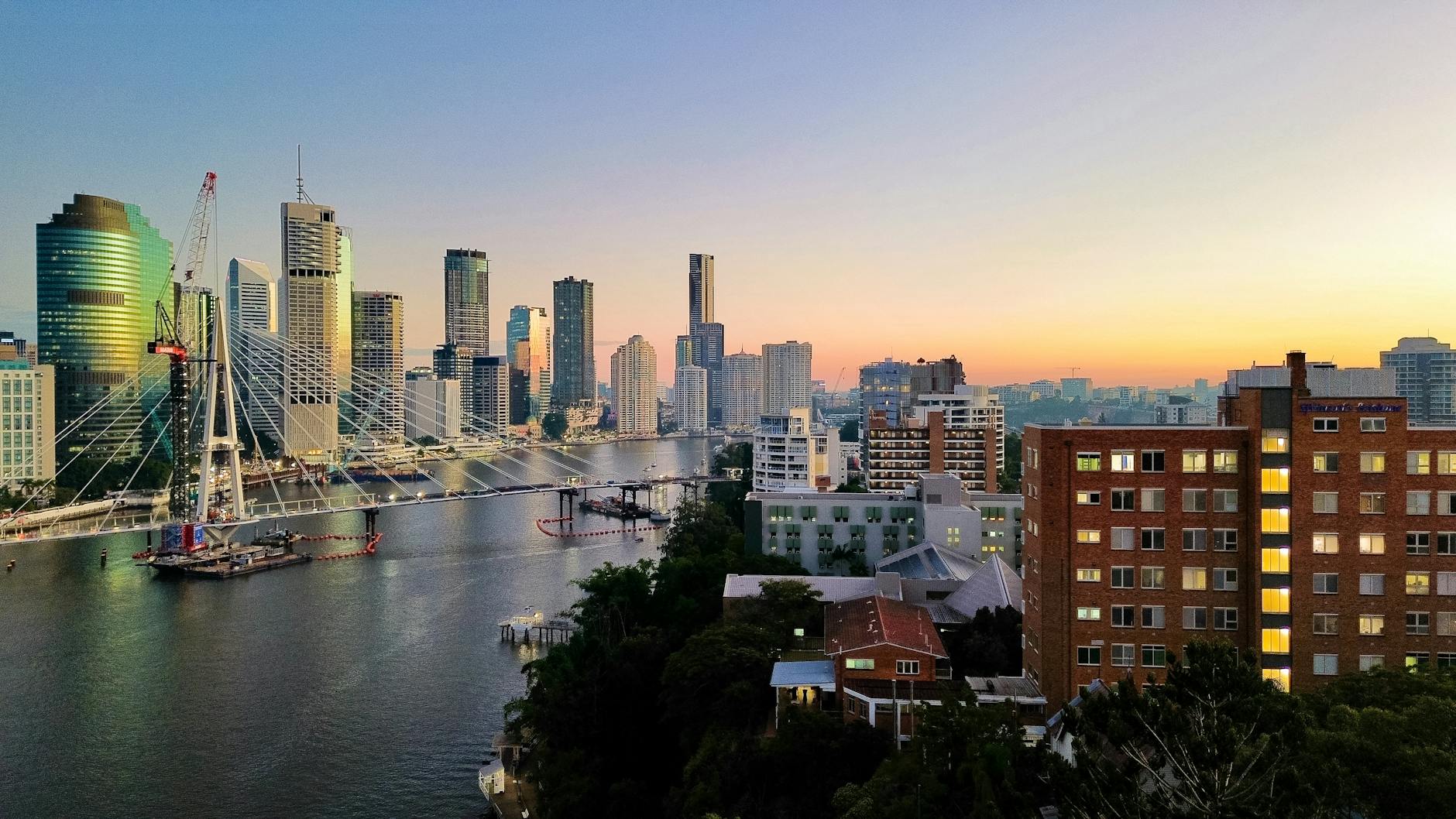
Post‑Olympic rental markets are displaying an unusual pattern. While gross yields have compressed as capital values rose faster than rents, vacancy rates remain extremely tight at 1.1% (SQM Research, July 2026). This is partly because many properties that served as short‑stay accommodation during the Games have now returned to the long‑term pool, but population demand continues to absorb the supply.
Investors should note:
- Interest‑only loan approvals for Brisbane postcodes grew 14% year‑on‑year (APRA, June 2026), indicating a resurgence in investment lending.
- Lenders are requiring rental coverage ratios of 120‑130% of interest payments; at current yields and rates, only 22% of Brisbane houses meet this threshold without the borrower injecting additional cash flow.
- High‑density unit oversupply in specific precincts (e.g., Bowen Hills and Fortitude Valley) is suppressing unit rental growth to 2.1% annually, while houses in family‑friendly suburbs like Camp Hill record rental growth of 5.6%.
Infrastructure‑Driven Hotspots: Where Borrowers Can Still Find Value
Post‑Olympic Brisbane’s most resilient price growth is concentrated around transport and urban renewal nodes. The following corridors show above‑average capital performance and strong loan approval volumes:
- Cross River Rail South (Woolloongabba to Yeerongpilly): Median house A$1.05 million, +10.3% annual growth. 5 new station precincts completed, high owner‑occupier demand.
- Northshore Hamilton Renewal Zone: Median unit A$720,000, +6.1% annual growth. Waterfront redevelopment and improved CityCat terminals.
- Brisbane Metro North (Herston to Kedron): Median house A$950,000, +8.5% annual growth. Hospital and education employment anchors.
- Ipswich‑Springfield Corridor: Median house A$620,000, +2.1% annual growth. Higher investor supply but affordable entry point for first‑home buyers.
Lenders are increasingly using postcode‑level risk assessments. Some non‑bank lenders offer 90% LVR loans for properties in ‘infrastructure corridor’ postcodes, while restricting high‑LVR loans in areas flagged as oversupplied. This data should inform your pre‑approval strategy.
Q: Did Brisbane house prices crash after the Olympics?
No crash occurred. A mild 3–5% correction in the six months after the Games was fully recovered by mid‑2026. The Queensland Treasury recorded a 6.8% annual increase in median values for the 2025‑26 financial year.
Q: Is it a good time to get a home loan in Brisbane now?
With the RBA cash rate at 3.60% in August 2026, borrowing conditions are stable. Serviceability buffers remain at 3 percentage points, so applicants need around 6.60% assessed capacity. For owner‑occupiers with a 20% deposit, this can be a favourable entry point when combined with moderate price growth.
Q: Which Brisbane suburbs benefit most from Olympic infrastructure?
Suburbs along the Cross River Rail corridor—Woolloongabba, Dutton Park, and Albion—have seen capital growth 2‑3 percentage points above the Brisbane average since 2024. The Gabba Precinct and Hamilton Northshore redevelopment zones show the strongest rental demand.
Borrowing Strategy for Post‑Olympic Brisbane
In the current 2026 environment, a data‑anchored mortgage strategy is essential:
- Pre‑approval based on realistic LVRs: With prices stable but not surging, borrowers should aim for LVRs below 80% to avoid Lenders Mortgage Insurance (LMI) and access lower rates. LMI costs for an 85% LVR on an A$892,000 purchase can exceed A$12,000.
- Fixed‑rate rationalisation: With the yield curve inverted, three‑year fixed rates (5.65%) are cheaper than variable. However, if the RBA cuts rates one more time, variable could dip below 6.00%, so splitting the loan (half fixed, half variable) offers flexibility.
- Buffer for strata and council costs: In legacy redevelopment areas, body corporate fees for mixed‑use buildings have risen 4–6% annually, impacting serviceability. Factor these into your budget.
References

- CoreLogic Hedonic Home Value Index – July 2026. https://www.corelogic.com.au/our-data/indices. Independent, monthly updated price index used by RBA and major banks.
- Reserve Bank of Australia – Cash Rate Target. https://www.rba.gov.au/statistics/cash-rate/. Official central bank source for Australian monetary policy.
- APRA Quarterly Banking Statistics – June 2026. https://www.apra.gov.au/quarterly-banking-statistics. Prudential regulator data on loan approvals and LVR distribution.
- Queensland Government – 2032 Legacy Report. https://www.qld.gov.au/about/brisbane-2032. Infrastructure delivery and economic impact estimates for legacy projects.